Pet Water Fountain Buying Guide: The 4 Specs That Actually Matter
Affiliate disclosure: this page contains affiliate links — if you buy through them, we may earn a commission at no extra cost to you.
The short answer: a pet fountain succeeds or fails on four specs — pump noise, capacity, bowl material, and ongoing filter cost — and the $20 fountains cover all four when you pick deliberately. Everything else on the listing (LED water indicators, "smart" modes, flower spouts) is decoration. Here's the buying logic, spec by spec, plus who shouldn't buy one at all.
Spec 1 & 2: noise and capacity
Noise is the make-or-break: a humming fountain gets unplugged within a week, defeating the purpose. The tells in reviews: submersible pumps (quieter than external), a "low water = loud" pattern (universal — capacity fixes it), and any review containing "bedroom" (the honest noise test). Capacity follows a simple rule: ~1 liter per cat, 2+ liters per dog or multi-pet household. Undersized fountains don't just need refills — they run loud and burn pumps, because low water is the pump-killer. When in doubt, size up; a big fountain half-full still beats a small one empty at 6 PM.
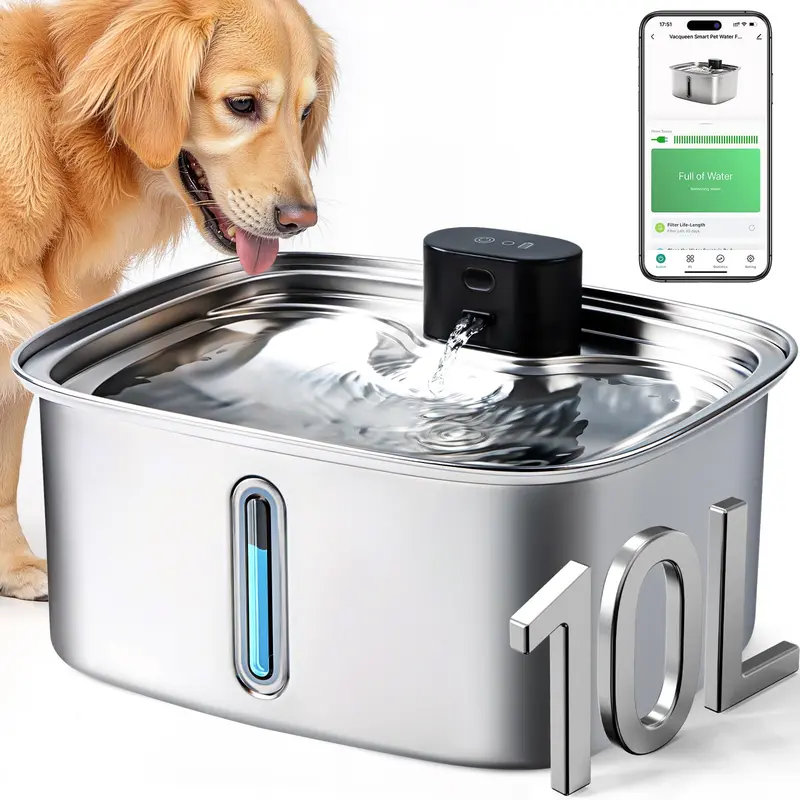
Automatic Pet Water Fountain
Cats drink more from running water — filtered, quiet, and the centerpiece of a million cat videos.
🚚 Free shipping on most orders · price at time of writing
Spec 3 & 4: material and the filter math
Material: plastic is fine functionally, but cats prone to chin acne do better with stainless or ceramic tops — plastic scratches microscopically and harbors the bacteria involved. If your cat has the chin dots, this spec jumps to #1. Filter math: the fountain is $18; the filters are forever. Before buying, check the listing's replacement-pack price and whether generic sizes fit (reviews answer this fast). A fountain with $1/month generic filters beats a nicer one locked into $4/month proprietary ones by year's end. Our cleaning routine covers the maintenance side of the same math.
Who shouldn't buy one (and the placement trick)
Skip the fountain if nobody in the house will clean it weekly — an unmaintained fountain is worse than a fresh bowl, full stop. And temper expectations for senior pets set in their ways: fountains win over most cats (moving water reads as fresh — the logic in our dog hydration guide applies to cats doubly), but "most" isn't "all". The placement trick that raises the success rate: away from the food bowl and the litter box — cats instinctively distrust water near either — and give it two weeks with the old bowl still available before declaring a verdict.
FAQ
What should I look for in a pet water fountain?
Four things: a quiet submersible pump, capacity of ~1 L per cat (2 L+ for dogs), stainless or ceramic if your cat gets chin acne, and cheap-to-replace filters. LED lights and smart modes are decoration.
Are cheap pet fountains from Temu any good?
The $18–25 tier covers the specs that matter when you pick deliberately — the review patterns to check are noise complaints and filter availability. The premium brands mostly buy quieter pumps and nicer materials, not different function.
Why won't my cat use the water fountain?
Placement first: move it away from food and litter. Then patience — two weeks with the old bowl still down is the fair trial. A minority of cats simply prefer still water; that's temperament, not a defective fountain.
→ See all Home, Plants & Pets picks